Taste and See How Sweet the Lord Is
Renovation of the Shrine of Our Lady of the Sickle, Vértessomló
Architects: Balázs Biri, Levente Szabó
Text: Zoltán Dragon
Photos: Balázs Biri
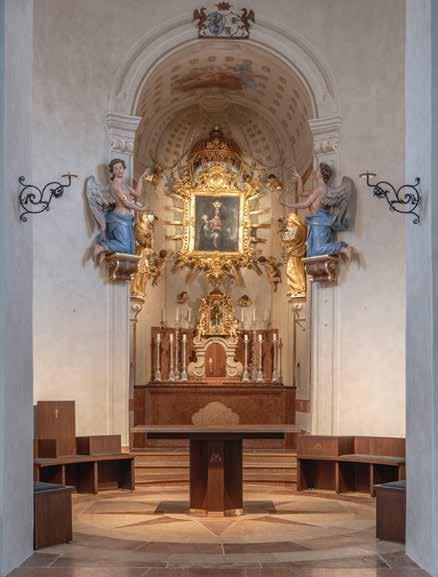
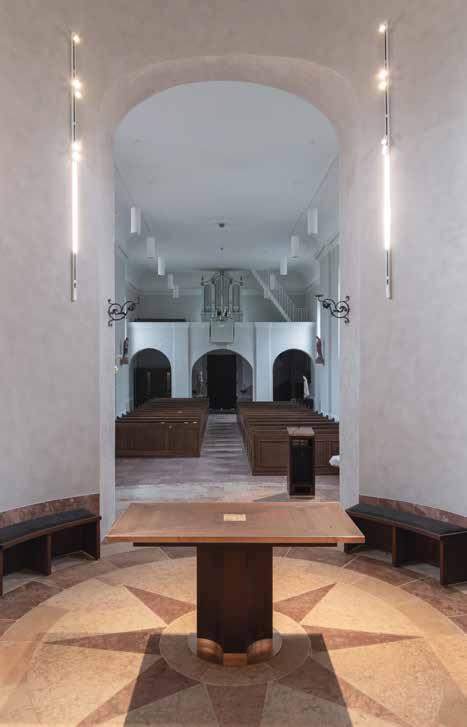
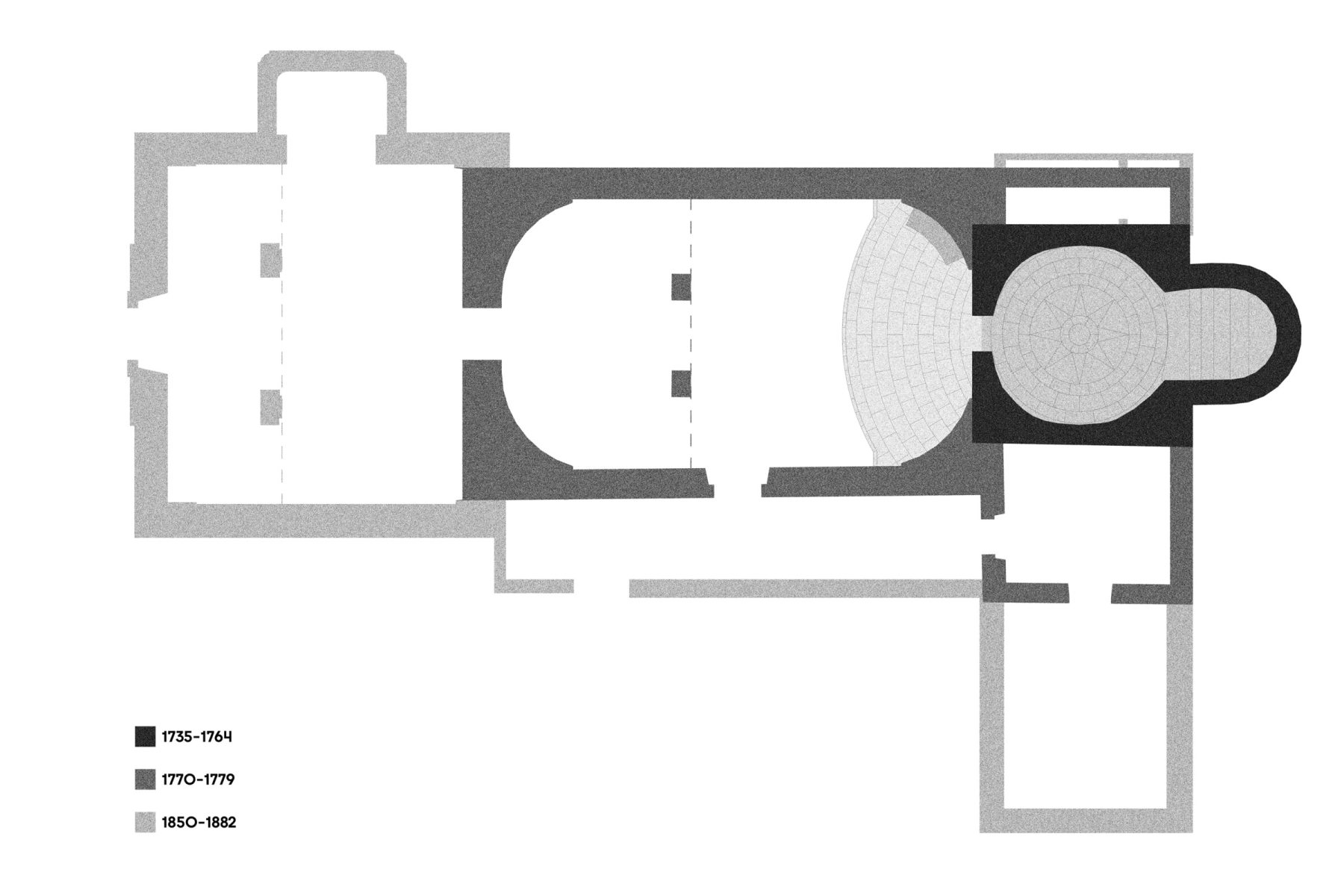
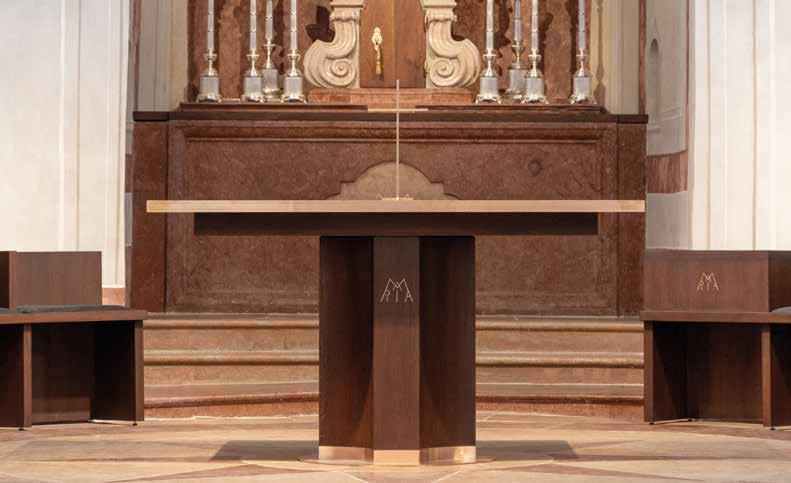
Consecrated at the end of 2024, the Shrine of Our Lady of the Sickle located in Vértessomló was a late-Baroque style building with an eclectic interior design influenced by past eras up until its renovation. However, the consecration of the altar did not close the chapter on the church’s modern architectural history, as further construction stages provide opportunities to write more new chapters. The renovation of the pilgrimage church resulted in a minimalist liturgical space, but this was not done with the intention of purism. The renovation project did not involve destruction; quite the contrary, due to the need for technical renovation, it resulted in the preservation of the church’s apse. The present-day minimalist style interior design of the church complies with the guidelines of the Athens and Venice Charters, meaning that parts that cannot be reconstructed have been replaced with contemporary components, in this case homogeneous, neutral-colored framed murals. At the same time, in addition to the restoration of the fine arts and liturgical objects, experts also made the apse wall paintings that had been uncovered exposed and visible. The old, incongruous altarpiece facing the congregation was removed from the church, and the symmetry of the space was restored by placing a new altar made of solid oak and bronze in the geometric center of the apse, which is the focal point of the liturgical space. Outside the arch evoking the foundation walls of the presumably medieval central chapel, but still within the sanctuary space raised by a step, a space for preaching was created, with a triple combination of an ambo, a disused but renovated pulpit as well as a baptismal font.
Client: Vértessomló Roman Catholic Church
General planning: Hetedik Műterem
Lead architects: Balázs Biri, Levente Szabó
Fellow architect: László Rátgéber
Wall painting restoration: Ferdinánd Horváth, Fanni Mogyorósi
Building history documentation: András Smohay