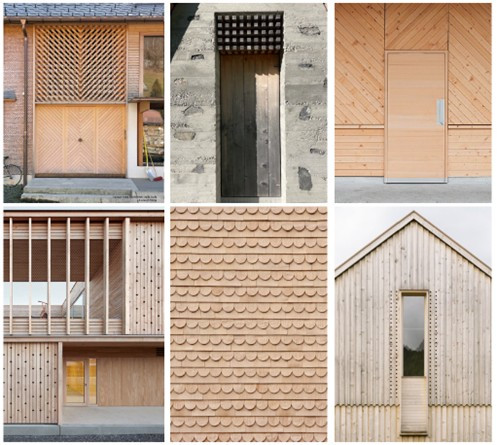
Craftsmanship in Architecture
Contemporary possibilities in timber construction in the work of Innauer Matt Architekten and Larix Studio
Text: Csaba Lázár
The relationship between building skills and “architectural design” is constantly changing as a result of technological developments. This phenomenon is particularly characteristic of contemporary timber architecture in the mountainous regions of Central Europe, where designers are increasingly interested in local resources and traditional craftsmanship. In my research, I examine two regions where timber architecture has a long history, but which have followed different paths in the footsteps of this common tradition. Can the ‘Vorarlberg model’ be applied in Székely Land, and can it have a reverse effect, providing impetus to regions on the periphery of Western development?
In my comparative analysis of the two regions, I focus on the work of Innauer Matt Architekten and Larix Studio, as both studios have a proven track record of paying close attention to the use of local, traditional building techniques, materials, and knowledge. Which practice strives to take a critical stance towards its surroundings? Do they question global, mass-produced, artificial products in the same way?
In my analysis, which is based primarily on interviews with those involved and on site visits, I focus not on specific buildings, but on the creators' self-interpretation. By exploring the financial possibilities and professional challenges of the two regions, the research brings us closer to understanding the design methodology that serves to integrate traditional knowledge into contemporary architectural practice.