The Hungarian Pavilion at Expo 2025
Architects: Gábor Zoboki, András Csiszér
Text: Csaba Kovács
Photos: György Palkó
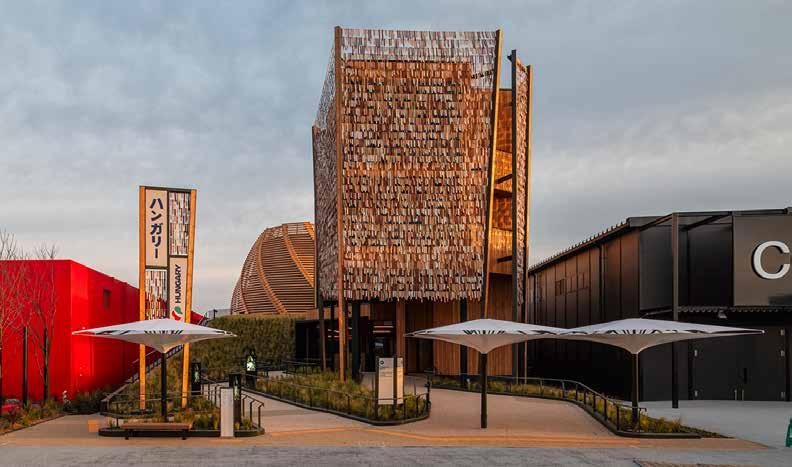
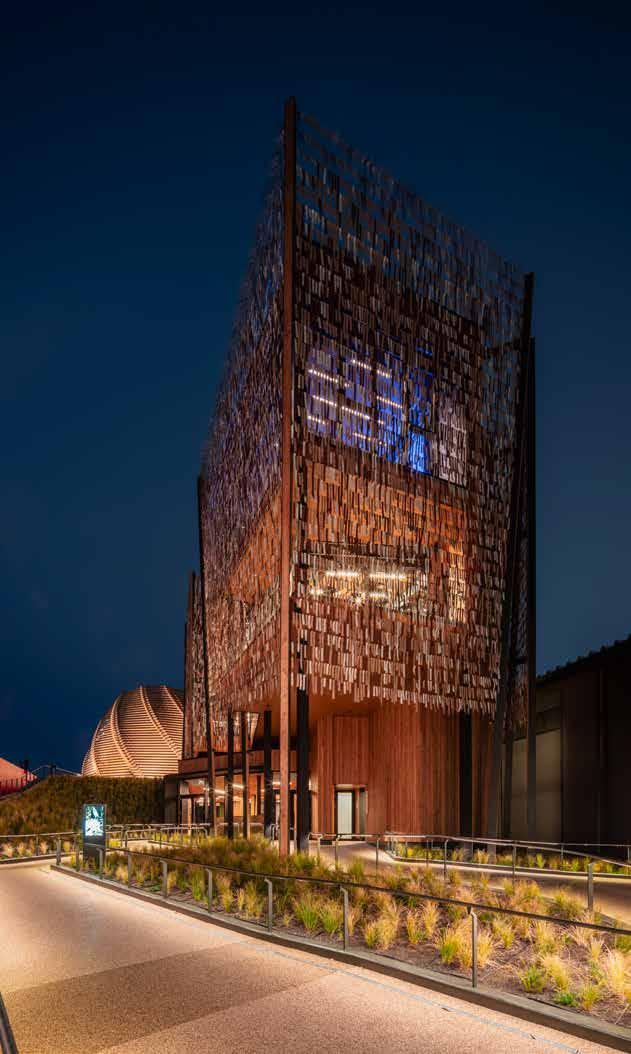
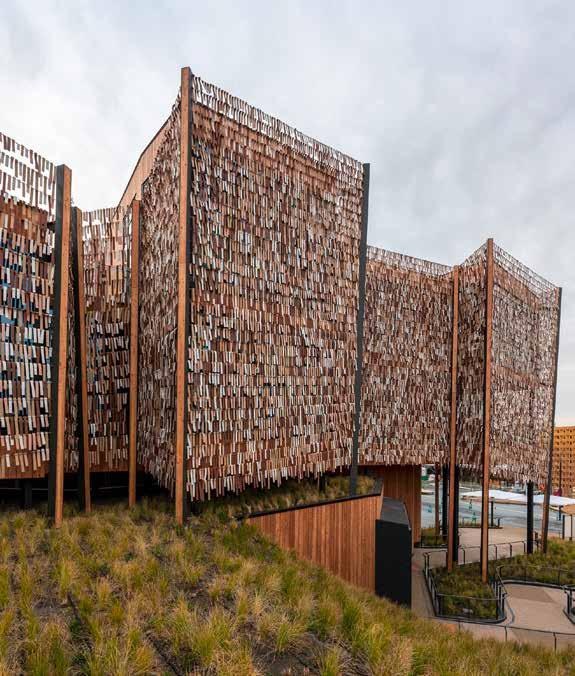
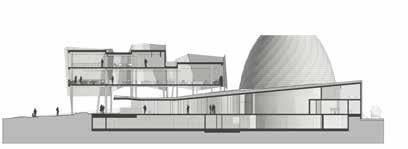
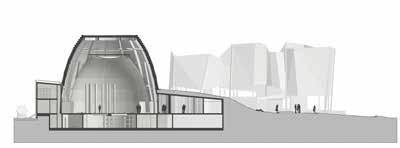
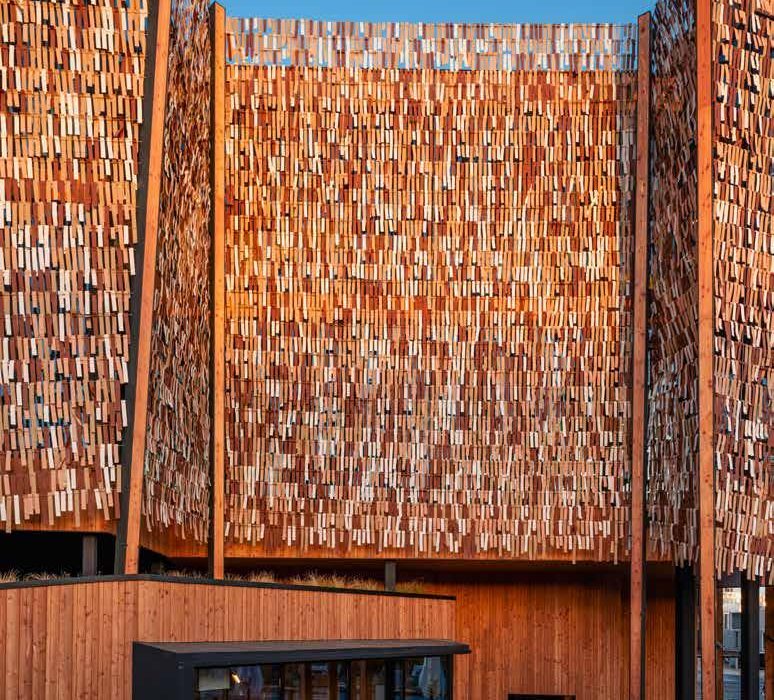
A world exhibition is always a significant opportunity and challenge for architecture, but at the same time, it also poses a huge architectural and aesthetic risk. With so many pavilions competing to outdo one another, it is not easy to find the appropriate style. In the predictable chaos ensuing here, it is not insignificant how a certain country interprets the purpose of its presence. The creators of the Hungarian pavilion have provided several fine answers to this challenge. The dominant material of the pavilion is glued wood, which ties in well with Fujimoto’s large wheel in terms of palette and materials, giving the pavilion some extra strength. It is also a valid decision to use other building materials, such as painted steel, glass, and a forest of mini flags that harmonize with the wooden expanses. The pavilion itself consists of several broken volumes, and the space left next to the asymmetrical cour d’honneur visitor paths has been used to create a hilly garden reminiscent of a flowery chamomile meadow. The interior of the dome remains completely neutral, in a „black box” style, with highlights reminiscent of a starry sky, whilst the exterior has a distinctive appearance with horizontally intertwined wooden beams in a twisted geometry reminiscent of basket weaving styles. The other chief element of the building is also distinctive: it is constructed from slightly irregular prismatic shapes, and its colors, volume and design successfully counterbalance that of the dome, creating a mysterious overall appearance with its small, ever-moving shading flags.
Client: EXPO 2025 Magyarország Nonprofit Ltd.
General planning: ZDA-Zoboki Architects
Lead architect: Gábor Zoboki
Design architect: András Csiszér
Project architect: Csaba Silvester
Architects: Laura Kiss, Csinszka Cserháti, Ferenc Fekete, Réka Iványi, Béla Reppert, Eszter Gyöngyösi, Zita Zöllner, Dorottya Peller, Fanni Salamin
Landscape: Andrea Balogh, Csaba Majoros – 4D Landscape Architects
Structure: Balázs Puskás – Terraplan ’97 Engineering
HVAC: Tibor Gáspár, Krisztián Béres – Körös Consult
Electrical engineering: Judit Balázs – Artvill Engineering
Building construction: Balázs Takács – FRT Raszter Architects
Room acoustics: Federico Cruz-Barney – STUDIO DAP, Paris
Theatre technology: Zsuzsa Tompai – Színházterv Ltd.
AV technology: Márk Kontra – Bolite Ltd.
Kitchen technology: László Eke
Building acoustics: Éva Arató – Arató Akusztika
Mechanical acoustics: Gusztáv Józsa – Józsa és Társai 2000
Scenery: József Lipka – The Greypixel Workshop
Janapese partner architects: So Kikaku Sekkei Co. Ltd.