19th Venice International Architecture Biennale
Text: György Szegő
Photos: LUMU, Andrea Fábián, labiennale.org
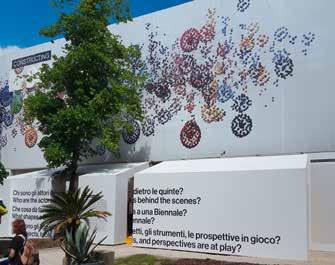
Skills and abilities are constantly expanding the image of architecture. As a result, this year’s biennale in Venice, which is more heterogeneous than ever before, hardly mentions the buildings on display; they are missing. Perhaps this is so because today, houses are mostly not intelligent, but mass-produced. A lot of exhibitors responded to chief curator Carlo Ratti’s call with cultural anthropological research on the body, work and leisure, and questions of home life, while many others offered work dealing with sustainability, urban economics and community management of problems – in data-based, interdisciplinary ways and also different genres. Many contrast the beauty and vulnerability of nature. Humanity’s fears for the future, wild and possible utopias – even walk-through models, beautiful photographs and projections, and thought-provoking ideas fill the space. The Hungarian pavilion exhibition features a former prestigious, now ‘abandoned’ architectural studio, with symbolic figures of those who once worked here sitting in front of their monitors. Among them are inventors, scientists, musicians, public figures, cultural and media professionals, as well as university professors. Their monitors remain on, allowing us to interactively learn about their research work. The essence of the concept is that talent adapted to today’s crisis environment should be presented through dialogue with creators from other fields and genres: the work of architects is undergoing a transformation.